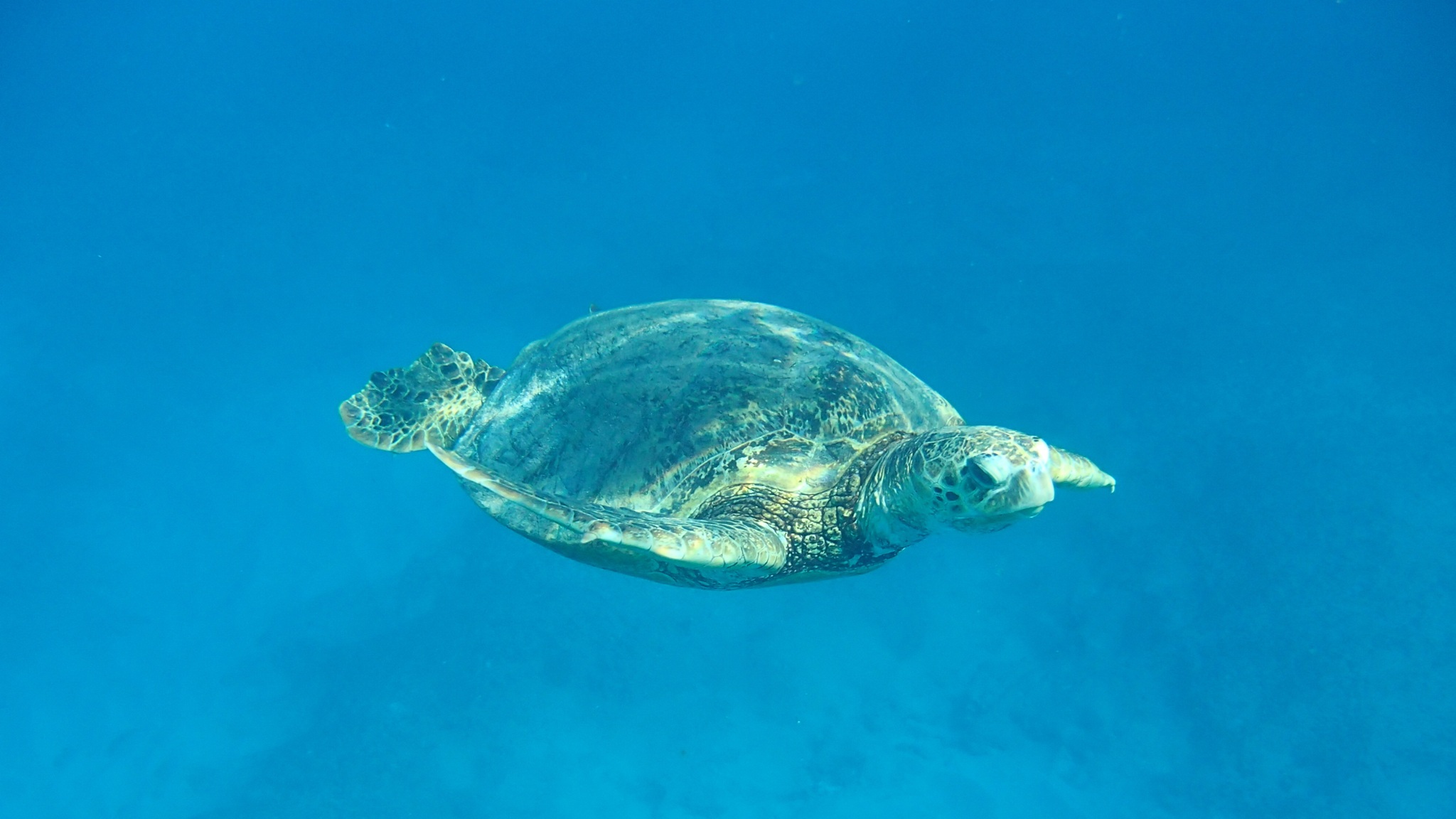
NSW National Parks rangers and field officers already have a day job that would make the average nine-to-fiver tapping away at the laptop jealous. But every now and then, they have a work day so eventful that it’ll wind up as a story for the grandkids. For NSW National Parks, Marine Wildlife Team Project Officer Andy Marshall, this was one of those days.
The rescue
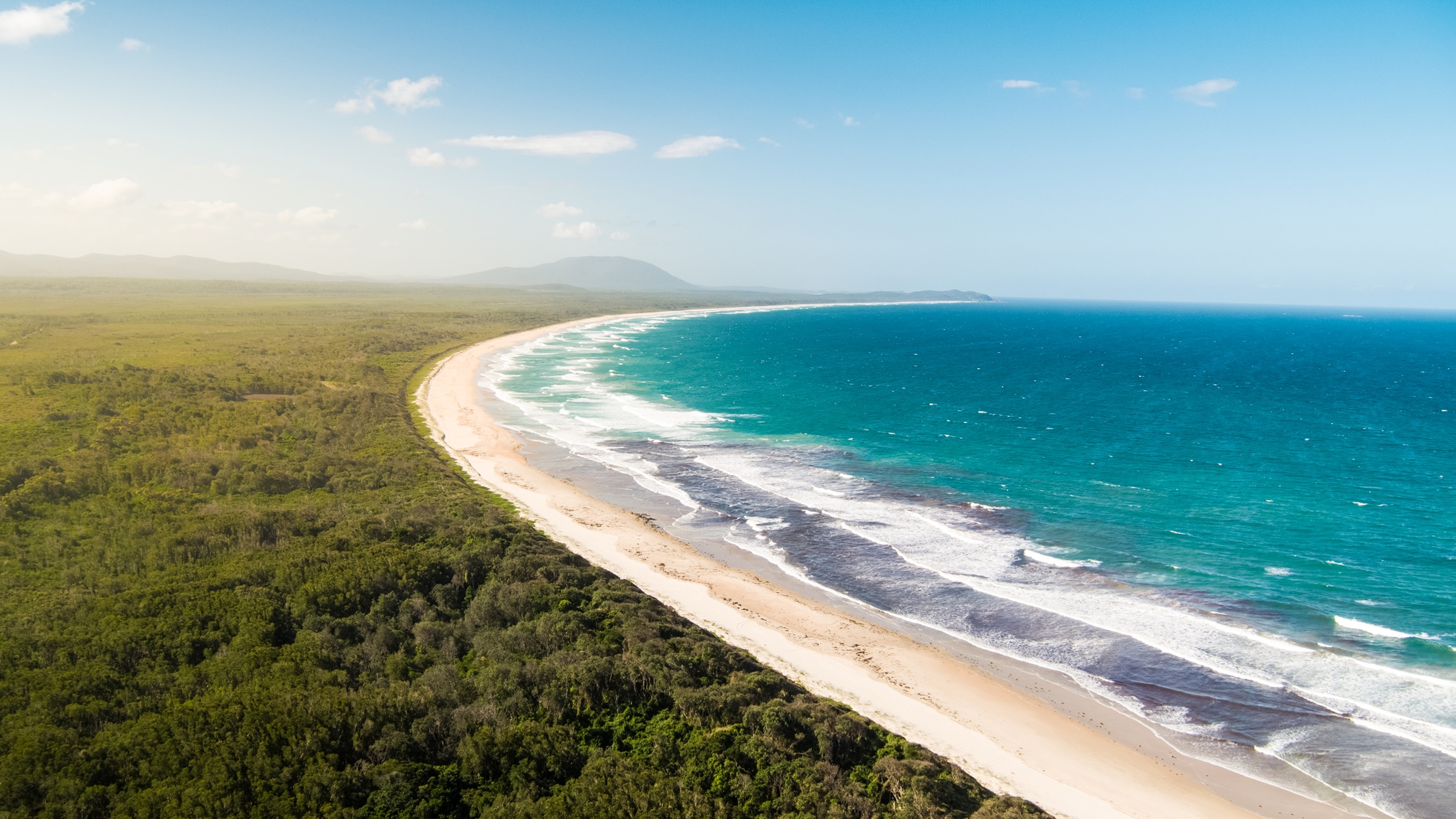
Andy Marshall was on a volunteer patrol as part of the surf club at Crowdy Head, adjacent to Crowdy Bay National Park, when his shift took an unexpected turn. It was the perfect day to put a couple of the teenage lifeguards into a rubber ducky for a training run. Out past the breakers, Andy saw two turtles sitting on the surface of the water, and quickly turned off the engine of the boat.
As he and the trainees paddled the boat over, one turtle dove majestically down through the clear waters, but the other stayed on the surface. “I knew it was not normal behaviour for a turtle that would have felt threatened by a boat to not swim away.” As Andy and the young lifeguards approached, they saw the turtle was covered in seaweed, algae and barnacles growing around its eyelids, over its nostrils and around its flipper joints. The aggressive build-up indicated the turtle could not swim normally and was in distress.
From his experience as an NPWS officer, Andy knew this turtle wasn’t going to survive on its own (remember: healthy turtles shouldn't be disturbed on land or in the water). So, he put the teenage lifeguards in charge of the paddles, and dove overboard into the water, using a technique called a ‘rodeo catch’ to land carefully on top of the animal to secure it before it swam away. Lifting the turtle into the boat, Andy made his way back to shore and carried it up to the clubhouse and into a shallow bath of water, where he began organising transport with the help of another local NSW National Parks ranger, Ben Stevenson, on-duty in Port Macquarie, to get the turtle to Coffs Coast Wildlife Sanctuary for treatment.
Did you know? Green sea turtles get their name from the greenish hue to their body fat, which is from their diet of exclusively green things - algae and seagrass!
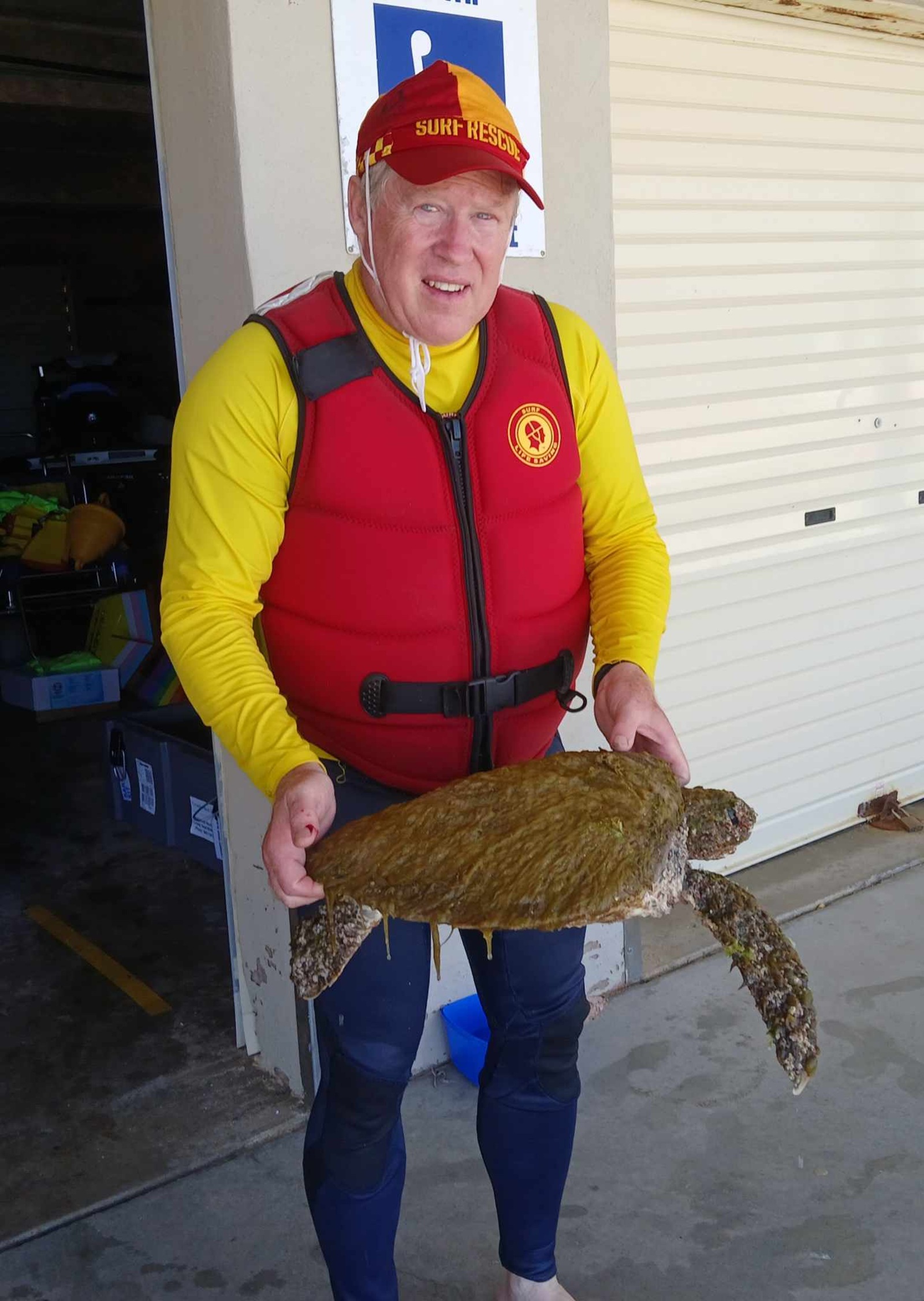
Jeffery turned out to be a juvenile green sea turtle, a species common to the waters off Crowdy Bay National Park. At the time he was rescued, he measured 42.5cm long, and was about 12 years old, meaning he wouldn’t reach breeding age for another 10 to 12 years. The burning question, though: how did he get his name? Andy tells of Ben, the parks ranger who was tasked with transporting the turtle to Coffs Coast Wildlife Sanctuary. Knowing he wasn’t going to be able to make the long journey that afternoon, Ben took the turtle home to keep it calm in a safe place overnight.
“He had two young kids who became immediately enamoured with a turtle in their garage at home, and they were the ones who came up with the name!” explains Andy. “There was a fear given his condition he wasn’t going to make it overnight, but in the morning he was still alive, and Ben jumped in the car and drove him straight up the coast to the wildlife sanctuary.”
Did you know? Despite calling Jeffery a boy, the signs which reveal gender don’t develop until the turtle reaches breeding age, so it isn’t known if Jeffery is a male or female! The gender of turtles is determined by the sand temperature when the eggs incubate in the nest, with males produced in cooler temperatures and females developing when it's warmer. That’s why it's so important to protect turtle nests in NSW which, due to cooler temperatures, produce much needed males for the population.
Jeffery’s recovery
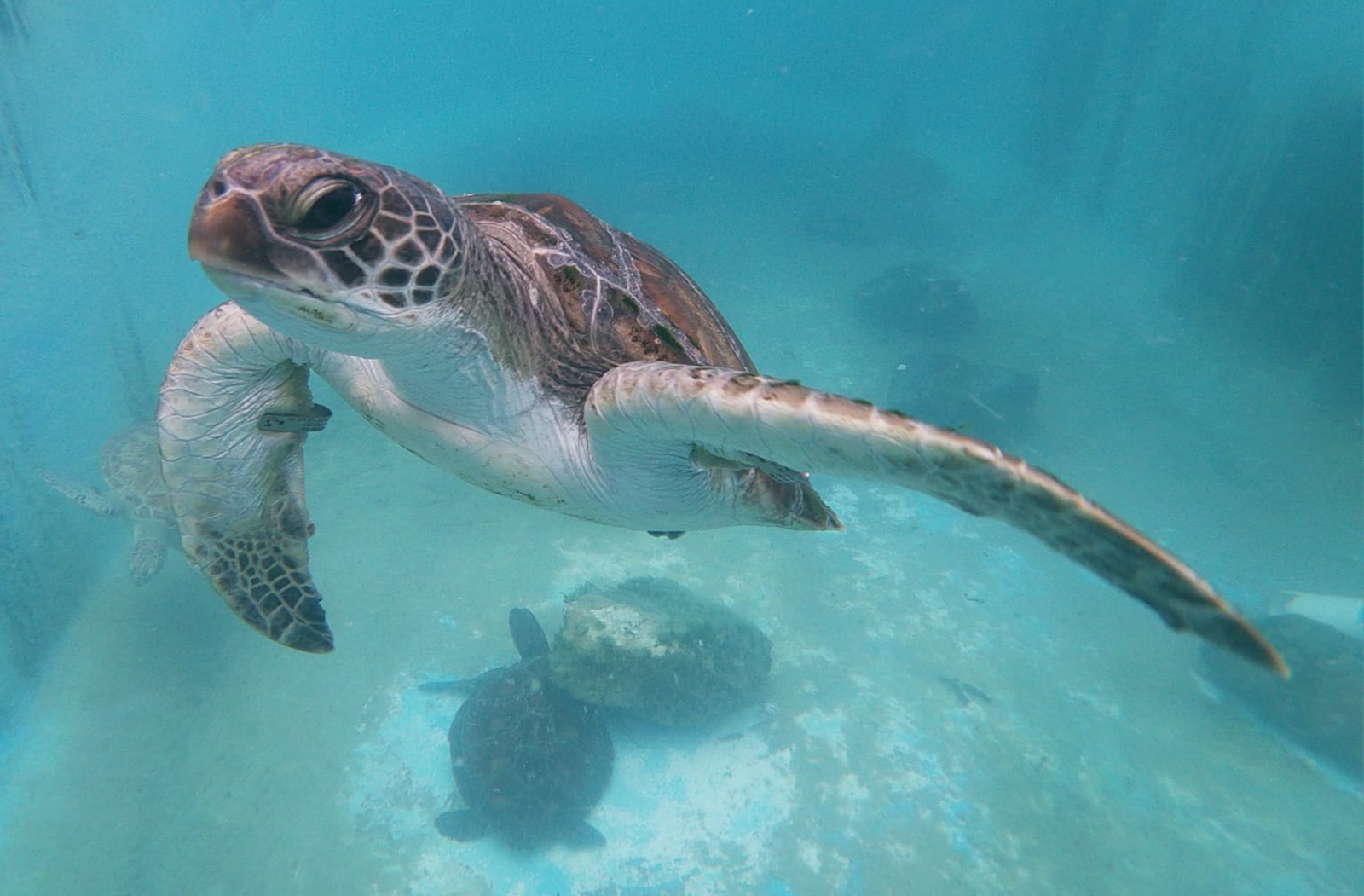
Jeffery had what is known as ‘float syndrome’: a build up of gas in the lower digestive tract of the animal and sadly, a common condition affecting turtles. It can be caused by blockages from something a turtle has eaten (leading to a build up of gas from partially digested food not passing to waste), or accidents that may cause lung injuries or cracks in a turtle’s shell.
“The animal becomes more buoyant than it should be and just ends up sitting at the surface floating,” Andy explains. “Anything near the surface is more likely to build up lots of algae and barnacle growth because it’s more exposed to sunlight. Then it uses more energy attempting to dive, and can’t get to food on the seabed or get into underwater sleeping caves and crannies, which means it becomes an easy target for predators, washes up on a beach, or starves.”
After spending three months in rehabilitation and care at Coffs Coast Wildlife Sanctuary, where Jeffery was able to rest in a stable environment with the right water levels, and have the barnacles and algae removed, it was time to return him to Crowdy Head Beach.
Read all about another remarkable rescue mission was carried out in March 2025 by volunteers from NPWS and NSWTurtleWatch. With Ex-Tropical Cyclone Alfred approaching the NSW North Coast, over 1000 eggs from nine beaches were relocated before they were destroyed by wild seas and put in incubators until they could hatch and be released.
“It was a bit chaotic because we hadn’t realised so many onlookers were going to turn up,” Andy recalls. The family who’d nursed Jeffery after his rescue and gave him his name were among the crowd of kids and adults.
“Because he was back in good health he was flapping his fins pretty hard,” Andy recalls. “As soon as we put him in the water he took off like a rocket! His head popped up out the back of the surf about 100m away and that’s the last we saw.”
Was it bittersweet for Andy? “Nah, it was just awesome. On day one there was this turtle who was looking awful and he was within hours or days of death, and now I could see the beautiful change in his scales, eyes and strong, animated behaviour. I’ve been involved in quite a lot of wildlife rescues in my career and it's always a buzz.”
Andy’s passion for protecting wildlife comes from fond family memories that he hopes those who come after him will have, too. “I remember sitting on the little old jetty in Crowdy Head Harbour with my kids when they were tiny tackers just watching turtle heads pop out of the water as the sun was setting. We could all appreciate that there’s these pretty incredible creatures out there. I hope my kids and grandkids have that opportunity to see turtles swimming right there with their kids one day.”
If Jeffery, and Andy’s, stories have sparked a desire to lend a hand, there are lots of rehab and rescue organisations right here in NSW which anyone can join and volunteer for, including Coffs Coast Wildlife Sanctuary where Jeffery was nursed back to health, ORRCA who specialise in whale, dolphin and seal rescue, and Australian Seabird and Turtle Rescue which is also in the business of saving creatures who live in or near our oceans.
NSW National Parks and Wildlife Service runs a range of threatened species volunteering programs to check out, too.
Ranger’s tip: Andy is highly trained and knew how to spring into action to help Jeffery. But for the rest of us, it’s important to know what to do if we come across injured or sick wildlife. Spoiler alert: calling someone who is trained is step one, and sometimes you might be asked to take some simple steps to keep your new friend safe and minimise stress until trained help arrives.
Read the inspiring story of another wildlife warrior, Susan Crocetti, who has rescued marine life from turtles to whales.