Adam Fawcett is a NSW National Parks Project Officer who specialises in threatened species. He is the site manager for the Green Gully brush-tail rock-wallaby site and project manager of the rock-wallaby cam.
What are the main threats faced by the brush-tailed rock-wallaby?
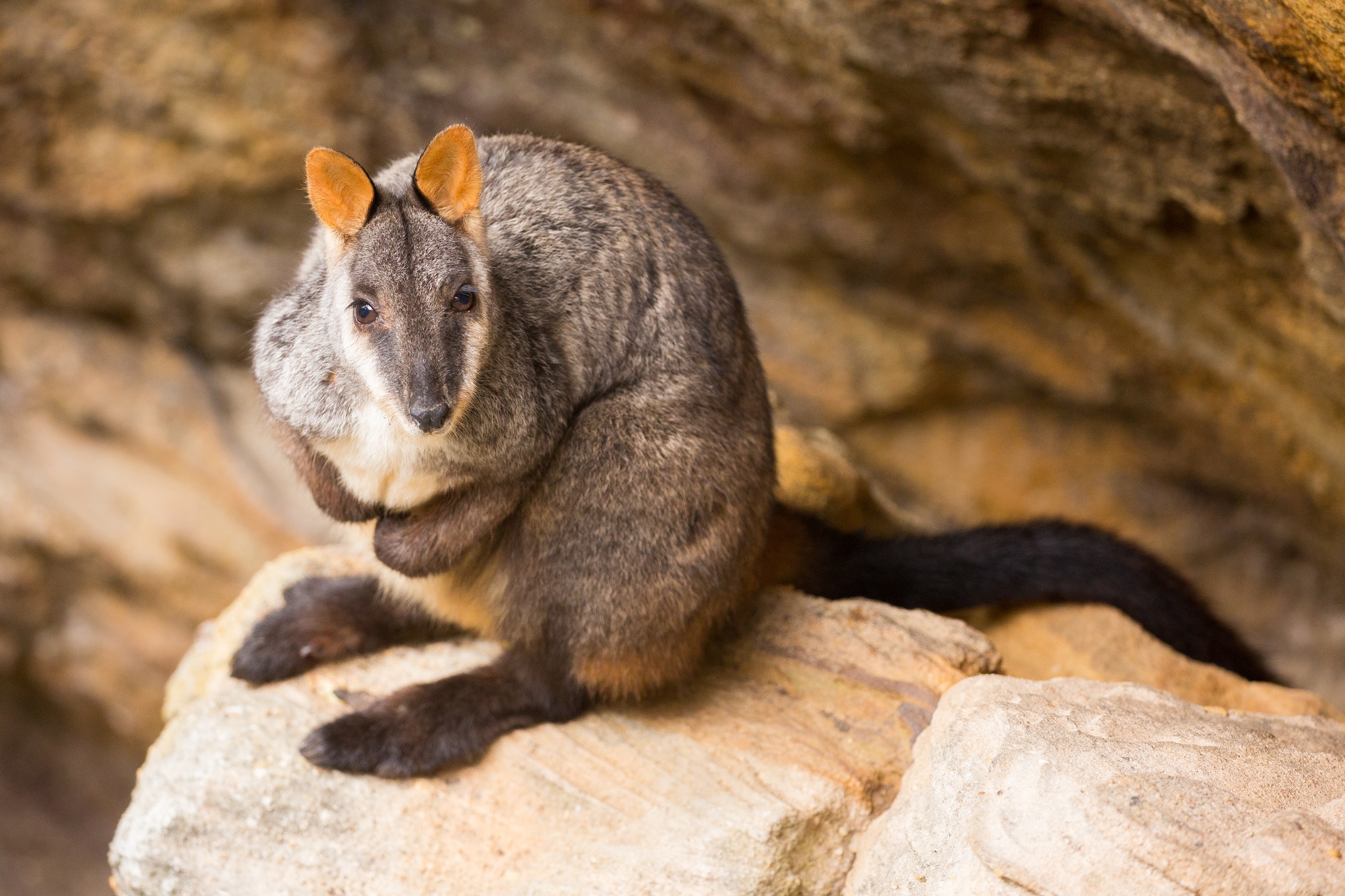
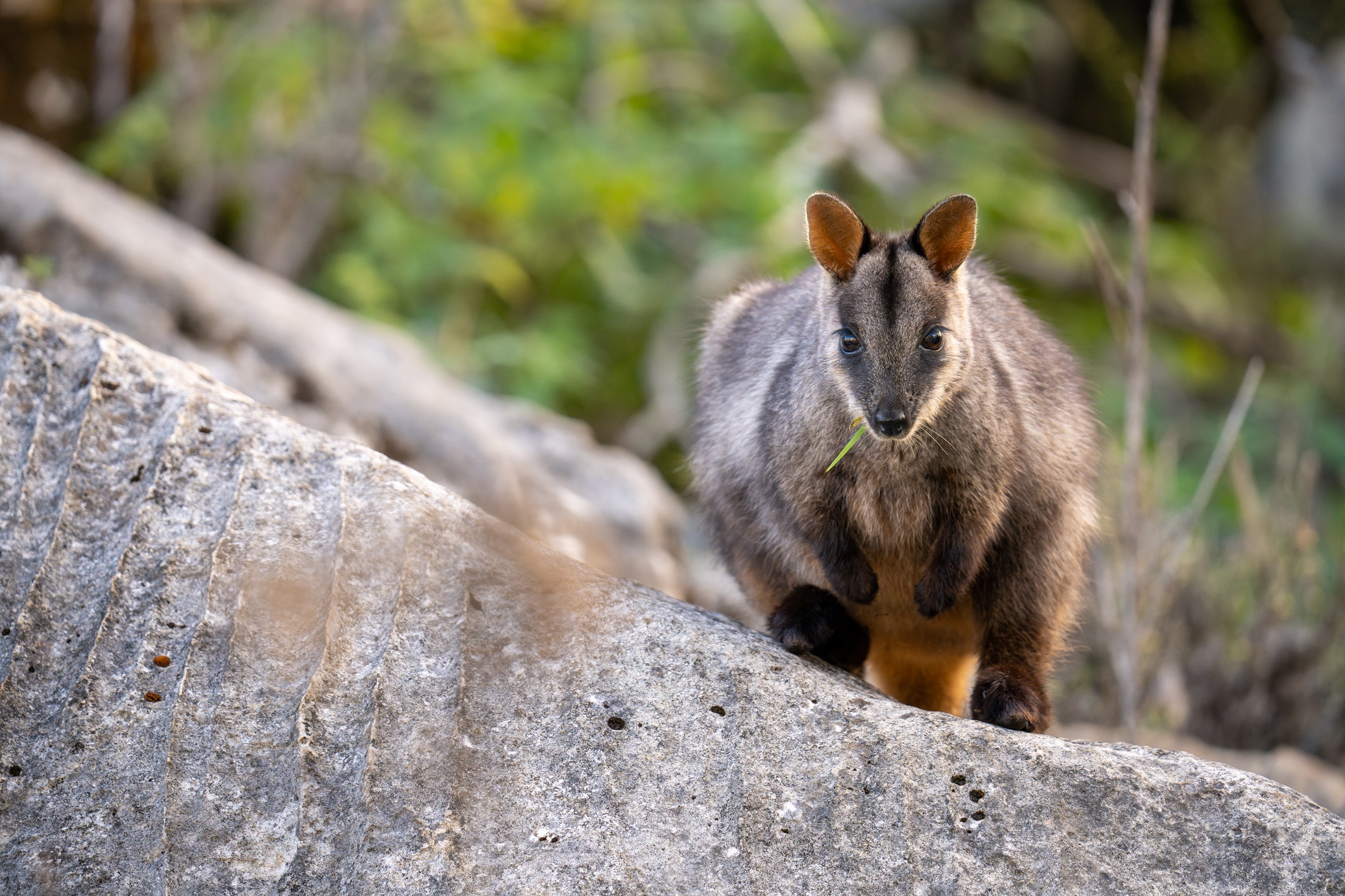
The critical threats impacting brush-tailed rock-wallabies include predation by foxes and feral cats, competition for food and habitat from feral goats, and high frequency and high intensity fires. The impacts from fires, feral cats and foxes tend to impact across all populations, while competition from feral goats is a greater problem within western NSW populations, but can be a problem where goat populations erupt within eastern parts of its range.
What makes this population special?
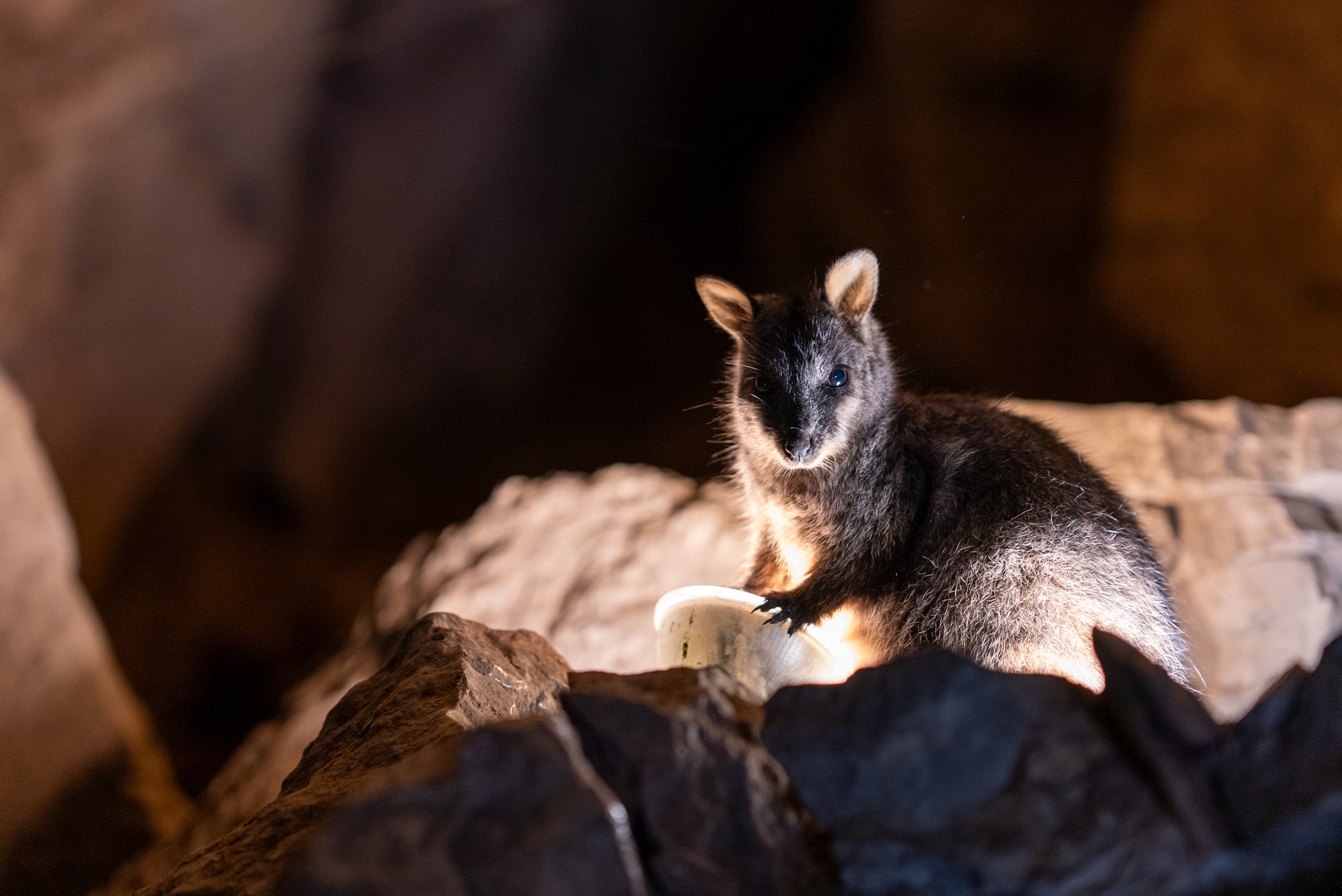
The colony monitored by the live streaming camera is part of a broader population within the Green Gully area of Oxley Wild Rivers National Park, with over 60 known brush-tailed rock-wallabies across the landscape. This colony has been part of ongoing studies into the brush-tailed rock-wallaby and the impacts of feral animals, with researchers occasionally turning up on the live-stream, including the radio-collaring of rock-wallabies that occurred in the past 12 months.
How do live streams support conservation efforts? What can we learn about the species by monitoring them in this way?
The live streaming of this colony has allowed insights into the behaviour and activity of the rock-wallabies as part of ongoing monitoring with minimal disturbance to the colony. In addition, the camera has also identified when pest animals are impacting the site and allowed for reactive management to occur within a very short timeframe. There have also been other threatened species detected including the spotted-tailed quoll which has made a couple of surprise cameos.
The other benefit of the live stream is that it has allowed everyone to observe the rock-wallabies, something which is typically difficult to do given they live in steep, rocky habitat that is often very hard to access and they tend not to hang around when people are in the area.
What’s your favourite brush-tailed rock-wallaby fact?
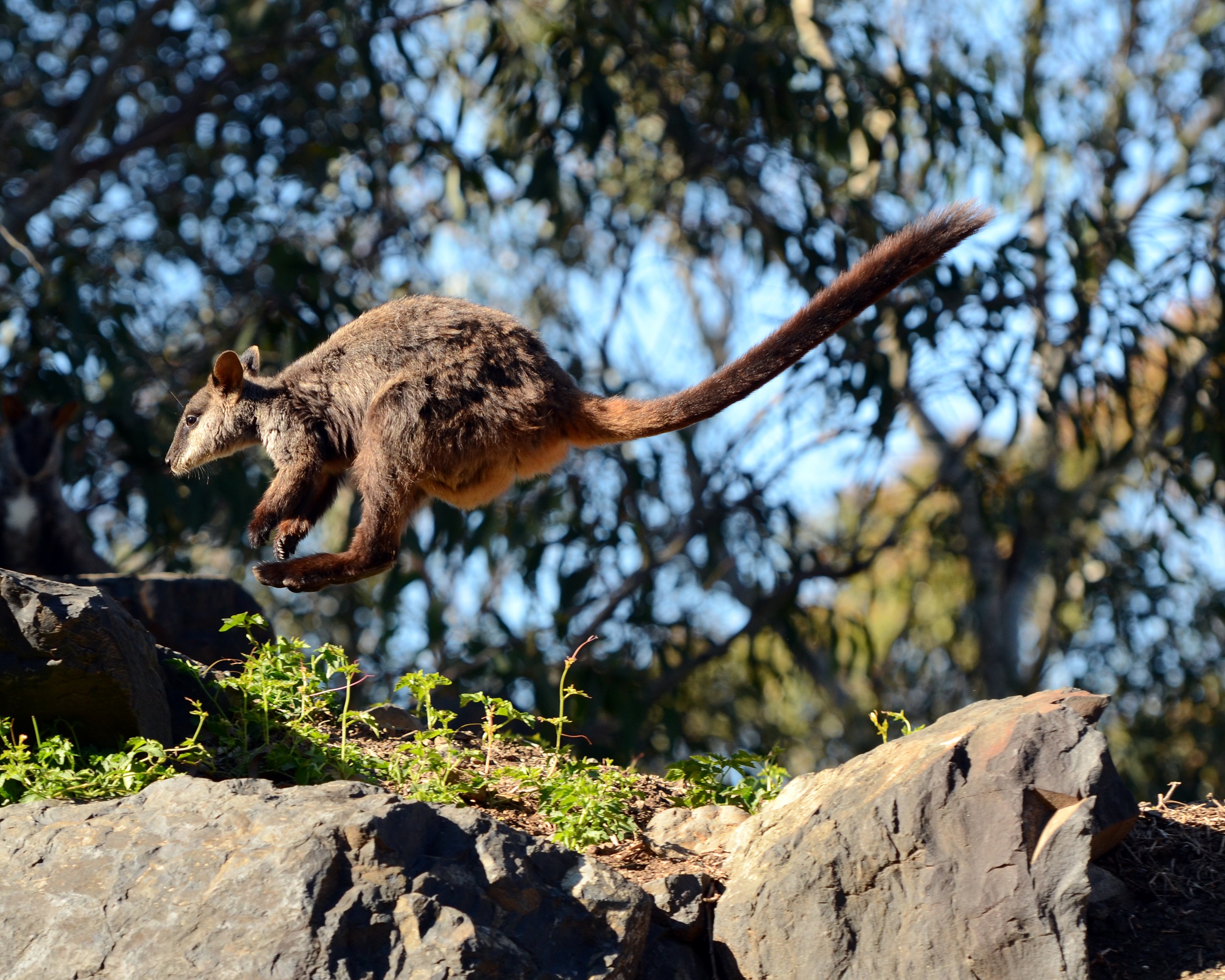
Brush-tailed rock-wallabies are incredibly adept at getting around the steep rocky habitat in which they live. They have an amazing ability to move around in all three dimensions, to move up steep, almost vertical cliff faces to escape predators – something that is not commonly seen is that rock-wallabies will bounce up into and perch on branches within trees. When they are super active, watching the live stream can give you a real sense of this ability to move within three dimensions across the colony as they scoot and chase one another.
Why did you choose to specialise in this animal?
I started working on rock-wallabies in around 2002 as part of the NSW Fox Threat Abatement Plan, a precursor to the current Saving Our Species program. I was able to contribute to the state recovery team for this species and my involvement in these recovery efforts led to an ongoing interest and management of the species for NSW National Parks. This has continued in my role as a threatened species officer within the Northern Tablelands. I also currently represent NSW National Parks on the national recovery team for this species.
Now all that’s left for you to do is grab the popcorn and enjoy the show!
Inspired to get out and do some real life wildlife spotting in national parks? Do your bit for conservation by admiring animals from a distance and keeping your snacks to yourself.